Concern: Acne Scarring & Post-Acne Marks
Acne scars don't have to
be permanent.
The texture left behind after breakouts can feel like a constant reminder. But with the right clinical approach, those indentations, marks, and uneven surfaces can be progressively rebuilt from within.
Understanding Acne Scars
What causes acne scarring
Acne scars form when inflamed breakouts damage the deeper layers of skin. The body attempts to repair this damage by producing collagen, but when it produces too little, depressed scars form. When it produces too much, raised scars or keloids appear. The severity depends on the depth of inflammation, your skin type, and whether the acne was picked or squeezed.
Not all marks are scars. Post-inflammatory hyperpigmentation (PIH) leaves flat, discoloured patches that sit on the skin's surface. Post-inflammatory erythema (PIE) appears as persistent pink or red marks. True acne scars are textural changes that alter the skin's architecture. Understanding which type you have determines the entire treatment strategy.

Types of Acne Scarring
Ice Pick Scars
Narrow, deep pits that extend into the dermis. They look like the skin has been punctured with a sharp instrument. These are the deepest type and require aggressive collagen remodelling to fill from the base upward.
Boxcar Scars
Broad, rectangular depressions with sharply defined edges. They result from widespread tissue destruction during inflammatory acne and are most common on the cheeks and temples. Microneedling is particularly effective here.
Rolling Scars
Wide, shallow undulations that create an uneven, wave-like texture across the skin. Caused by fibrous bands pulling the epidermis down. Rolling scars often respond well to a combination of microneedling and LED therapy.
How We Treat It
Recommended treatments for acne scars
Every scarring pattern is different. We combine technologies based on your scar types, skin tone, and sensitivity to build a protocol that progressively smooths and resurfaces.

Primary Treatment
Microneedling
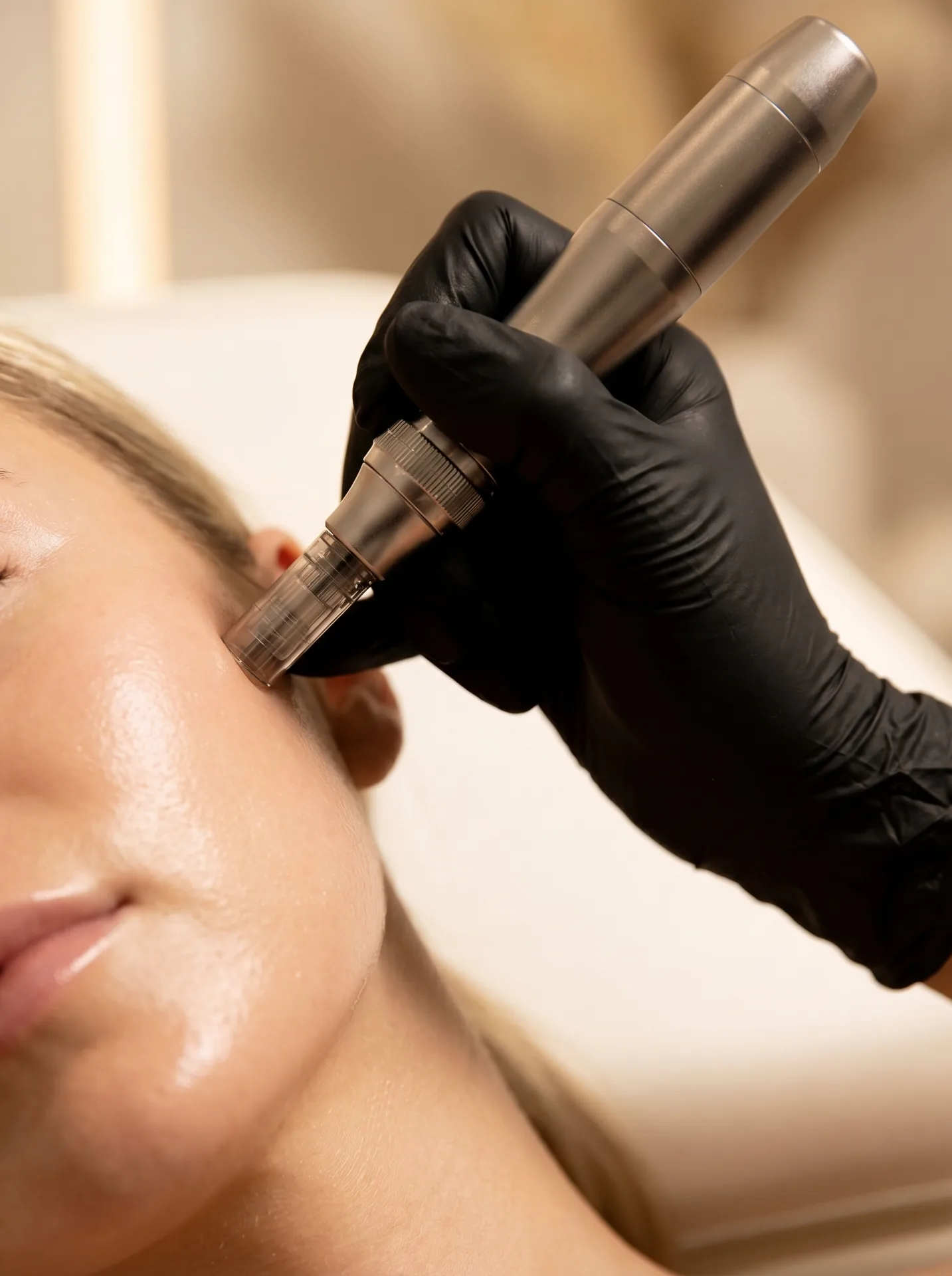
Collagen induction therapy that creates thousands of micro-channels, triggering your skin's wound-healing response to rebuild texture from within. 4-6 sessions for transformative results.
View Treatment arrow_forward
Supporting Treatment
HydraFacial
Deep cleansing and exfoliation that clears congestion, brightens post-acne marks, and preps skin for collagen-building treatments.
View Treatment arrow_forward
Accelerator
LED Light Therapy
Red and near-infrared wavelengths accelerate cellular repair and reduce inflammation. Often paired with microneedling to enhance recovery and collagen synthesis.

Surface Renewal
Medical-Grade Peels
Controlled chemical exfoliation that dissolves the damaged outer layers, fading post-acne marks and improving skin cell turnover. Particularly effective for flat pigmented marks and shallow scarring.
The Science
How collagen induction
rebuilds scarred skin
Acne scars persist because the original wound healed with insufficient collagen. The skin literally lacks the structural protein needed to fill the depression. Microneedling works by creating controlled micro-injuries that restart your skin's wound-healing cascade.
Each puncture triggers three overlapping phases: inflammation (your body sends growth factors to the site), proliferation (fibroblasts produce new collagen and elastin), and remodelling (the new tissue matures and integrates with surrounding skin). Over four to six sessions, this progressive layering of new collagen gradually lifts depressed scars toward the skin's surface.
When we combine microneedling with LED therapy, the red light wavelengths at 633nm accelerate fibroblast activity and reduce post-procedural inflammation, meaning faster recovery between sessions and enhanced collagen deposition at the scar site.
Scar treatment is not a single session. It is a structured rebuilding of what your skin lost. Each visit adds another layer of collagen, another degree of smoothness.Eternity Clinical Approach
Common Questions
Frequently Asked Questions
Most acne scars can be significantly improved but rarely removed entirely in a single treatment. The goal is to stimulate enough new collagen to fill depressed scars and smooth the skin's surface texture. At Eternity Laser & Aesthetics in Dural, our microneedling protocols typically achieve 50-80% visible improvement over a structured series of treatments, with some clients seeing near-complete resolution of shallow scarring.
Most acne scarring requires four to six microneedling sessions spaced four to six weeks apart. Shallow scars and post-inflammatory marks may respond in fewer sessions, while deeper ice pick or boxcar scars often need the full series plus maintenance treatments. Your clinician at Eternity will assess your scar type during consultation and give you a realistic treatment count before you commit.
We apply a topical numbing cream 30 minutes before the procedure, so most clients describe the sensation as mild prickling rather than pain. The treatment intensity is calibrated to your comfort level and scar depth. Post-treatment, your skin will feel warm and look flushed, similar to moderate sunburn, which typically subsides within 24 to 48 hours. Eternity provides a detailed aftercare kit to keep your skin comfortable during recovery.
Acne marks are flat discolouration left behind after a breakout — they are pigmentation changes that sit on the skin's surface. Acne scars are textural changes where the skin's structure has been damaged, creating indentations or raised areas. Marks tend to fade with time and respond well to peels and LED therapy. Scars require collagen-rebuilding treatments like microneedling. At Eternity, we assess which type you have so we can recommend the most effective pathway.
Active acne should be brought under control before aggressive scar treatment begins, because microneedling over active lesions can spread bacteria and cause further scarring. However, gentler treatments like LED therapy and HydraFacial can begin immediately — they actually help manage breakouts while preparing your skin for scar-focused treatments later. At Eternity in Dural, we often design a two-phase plan: control the acne first, then treat the scars.
Smoother skin is a process —
and it starts with a conversation.
Book a complimentary consultation and let us map your scarring, explain your options, and design a treatment plan that works for your skin and your budget.
Serving Dural, Castle Hill, Bella Vista, Kellyville, Baulkham Hills and the wider Hills District.