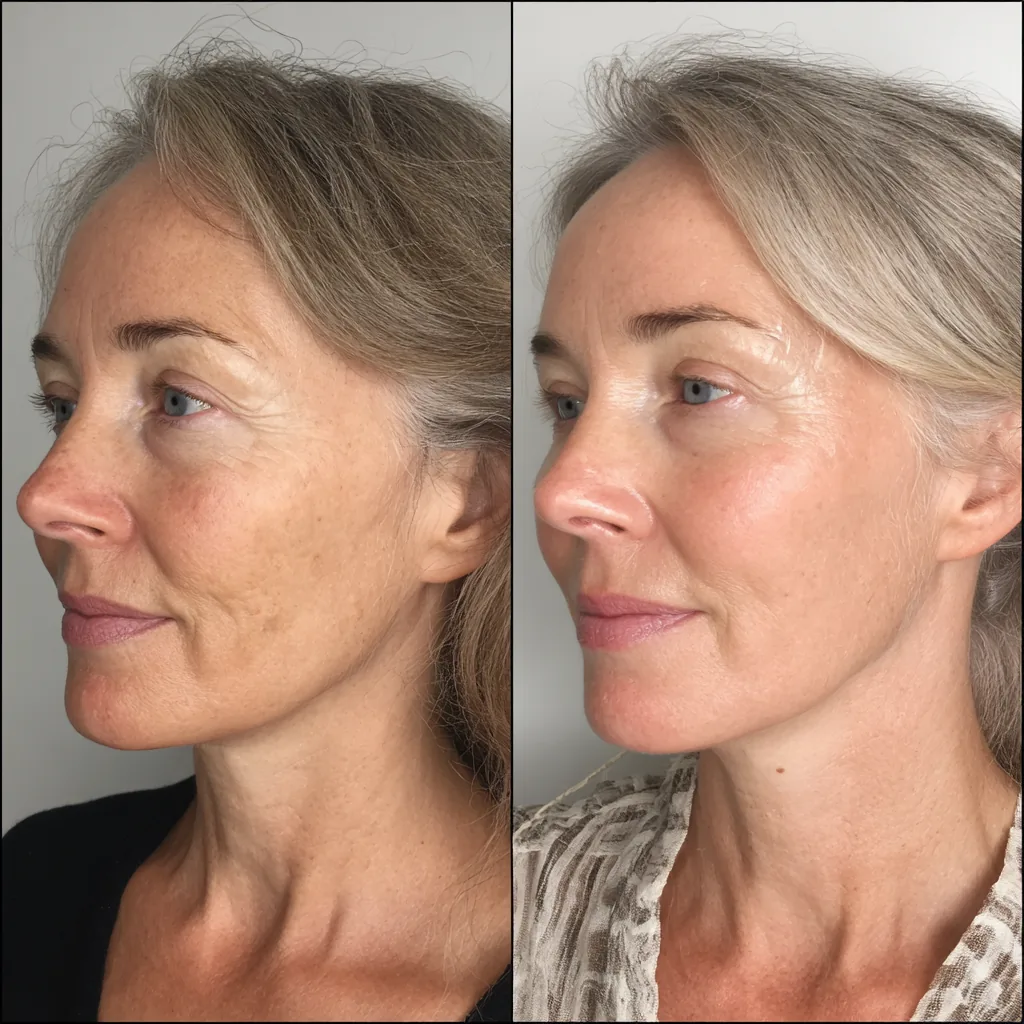
Living in Australia means living with UV. The Hills District enjoys a beautiful outdoor lifestyle, but it also means that cumulative sun damage is one of the most common concerns we see at Eternity. The reality is stark: according to the Cancer Council Australia, Australia and New Zealand have the highest rates of melanoma in the world, and two-thirds of Australians will be diagnosed with skin cancer by age 70.
But sun damage is not only a cancer risk. It is also the primary driver of premature skin ageing. Photoageing, the visible changes caused by chronic UV exposure, accounts for up to 90% of the visible changes commonly attributed to age: wrinkles, pigmentation, texture changes, laxity and dullness. The good news is that much of this damage is treatable, and sun damage treatment by age looks different at each decade.
The skin at 30: early signs, early action
For many Australians, the 30s are when sun damage first becomes visible. You might notice a small cluster of freckles that were not there before, a slight unevenness in your complexion, or a dullness that your 20-year-old self never dealt with. These are not signs of ageing per se; they are signs that your skin is beginning to show the accumulated effect of every beach holiday, school sports day and weekend walk without adequate protection.
What is happening beneath the surface
At a cellular level, UV exposure has been triggering melanocyte activity and breaking down collagen for years. By your early 30s, this process reaches the threshold of visibility. Melanin clusters appear as faint sun spots. Collagen breakdown causes the first fine lines around the eyes. Cell turnover slows, leading to a rougher texture and reduced glow.
Treatment focus: prevention plus gentle correction
In your 30s, the priority is twofold: prevent further damage and begin correcting what has already appeared. This is the decade where intervention is most efficient, because the damage is still superficial.
- HydraFacial every 4-6 weeks: Deep cleansing, exfoliation and hydration that keeps the complexion clear and promotes healthy cell turnover. An excellent maintenance treatment that addresses early dullness and congestion.
- Light chemical peels: Gentle lactic or glycolic peels to accelerate cell turnover and begin fading early pigmentation. These are mild enough for regular use.
- Vitamin C serum (daily): Topical L-ascorbic acid at 15-20% concentration provides antioxidant protection against further UV damage while brightening existing discolouration.
- SPF 50+ (non-negotiable): Broad-spectrum, applied generously every morning, reapplied during prolonged outdoor exposure. This single habit will do more for your skin than any treatment.
The skin at 40: visible damage, targeted correction
The 40s are when sun damage typically transitions from subtle to undeniable. The sun spots are darker and more numerous. Fine lines have deepened into visible wrinkles, particularly around the eyes and mouth. Skin tone is noticeably uneven, with patches of darker pigmentation on the cheeks, forehead and upper lip. There may also be textural changes: a roughness or "crepe-like" quality that makeup does not quite conceal.
What is happening beneath the surface
Collagen production has decreased measurably, typically by about 1% per year after age 30. Combined with the UV-accelerated breakdown, the skin's structural support is weakening. Elastin fibres are becoming disorganised (a condition called solar elastosis), contributing to laxity. Melanocyte activity is increasingly erratic, producing pigmentation that is deeper and more resistant to topical treatments alone.
Treatment focus: targeted correction and collagen stimulation
The 40s call for a more targeted approach. Maintenance treatments alone are no longer sufficient to address the visible changes. This is where clinical interventions become most valuable.
- DEKA laser for pigmentation: Targeted laser treatment to break down specific sun spots and areas of uneven pigmentation. Typically requires 1-3 sessions spaced 4-6 weeks apart, with visible clearing within days of each treatment.
- Microneedling (every 4-6 weeks): Creates controlled micro-injuries that stimulate the skin's natural collagen production. Effective for improving texture, reducing fine lines and enhancing overall skin quality. Often combined with growth factor serums for enhanced results.
- Korean Byrzn vitamin infusion: A brightening protocol that delivers concentrated vitamins and antioxidants into the dermal layer, helping to suppress melanin overproduction and restore a more even complexion from within.
- Prescription retinoids (nightly): Tretinoin at 0.025-0.05% accelerates cell turnover, stimulates collagen production and helps fade hyperpigmentation. This is the single most evidence-backed topical anti-ageing ingredient available.
For more on how we approach pigmentation specifically, visit our pigmentation treatment page.
The skin at 50+: accumulated damage, combination protocols
By the 50s and beyond, sun damage is typically at its most complex. Pigmentation is deeper and more varied. Laxity is significant, with loss of firmness along the jawline, neck and around the eyes. Texture may include rough patches, visible broken capillaries, and in some cases, actinic keratoses (rough, scaly spots that are pre-cancerous and should be assessed by a dermatologist).
What is happening beneath the surface
Cumulative collagen and elastin loss is substantial. The dermal layer is thinner. Hormonal changes (particularly menopause) have further accelerated collagen decline, with some studies suggesting women lose up to 30% of their skin collagen in the first five years after menopause. Blood supply to the skin has decreased, contributing to slower healing and a duller complexion. Melanocyte behaviour is increasingly unpredictable.
Treatment focus: combination protocols that layer results
The 50s and beyond require the most comprehensive treatment approach. No single modality addresses all the concurrent changes, so we design combination protocols that layer different treatments over time, each targeting a specific concern.
- Sofwave non-surgical skin tightening: Ultrasound energy stimulates deep collagen production to address laxity along the jawline, neck and brow. Typically 1 session annually with visible lifting over 8-12 weeks.
- DEKA laser (targeted): Continued management of sun damage removal with laser treatment calibrated for the specific pigmentation depth and type.
- Medical-grade skincare protocol: A comprehensive daily regimen including retinoids, vitamin C, peptides and growth factors, tailored to support the in-clinic treatments and maintain results between sessions.
- HydraFacial maintenance: Monthly HydraFacial sessions to maintain hydration, promote cell turnover and keep the complexion clear between more intensive treatments.
The most effective treatment plans we design for our 50+ clients are not about doing more. They are about doing the right things, in the right sequence, at the right intensity.
The treatment layering concept
At Eternity, we rarely recommend a single treatment in isolation. Instead, we design layered protocols that stack complementary treatments over a period of months, each one building on the results of the previous one.
For example, a typical 6-month protocol for a client in their 40s with moderate sun damage might look like:
- Month 1: Skin assessment and barrier preparation. Begin medical-grade skincare. HydraFacial to establish baseline hydration.
- Month 2: First DEKA laser session targeting specific pigmentation spots.
- Month 3: Microneedling session to stimulate collagen and improve texture. Continue homecare.
- Month 4: Second DEKA session for remaining pigmentation. Korean Byrzn vitamin infusion for overall brightening.
- Month 5: HydraFacial maintenance. Assess progress and adjust homecare.
- Month 6: Review results. Establish ongoing maintenance schedule.
This layered approach delivers better cumulative results than any single intensive treatment, and it is far gentler on the skin. For guidance on the hormonal pigmentation angle of sun damage, our melasma guide covers the nuances of treating hormone-driven pigmentation.
Prevention at every age
Regardless of where you are on the age spectrum, prevention remains the single most impactful thing you can do for your skin. Here are the non-negotiables:
- SPF 50+ broad-spectrum sunscreen: Every single day. Even on overcast days, even when you are driving, even when you are sitting near a window. Up to 80% of UV penetrates cloud cover.
- Reapply every 2 hours: Sunscreen degrades with time and exposure. If you are outdoors, reapplication is essential.
- Wide-brimmed hat and sunglasses: Physical protection is more reliable than any cream. A broad hat can reduce facial UV exposure by up to 50%.
- Vitamin C serum (daily): A topical antioxidant that helps neutralise free radicals generated by UV exposure and inhibits melanin production.
- Regular skin checks: Have your skin professionally assessed at least annually for any suspicious lesions. Early detection of skin cancer saves lives.
When to see a dermatologist vs an aesthetics clinic
This is an important distinction, and we are always transparent about it. At Eternity, we treat cosmetic sun damage: pigmentation, texture, tone, fine lines and laxity. We do not diagnose or treat skin cancer.
You should see a dermatologist or dedicated skin cancer clinic if:
- You have a new or changing mole (different size, shape, colour, or irregular borders)
- A spot that bleeds, crusts, or does not heal within a few weeks
- Rough, scaly patches that persist (possible actinic keratoses)
- Any lesion that your clinician or GP has flagged for further assessment
Our nurses are trained to identify potentially suspicious lesions during your consultation, and we will always refer you to a specialist when warranted. Your skin health comes before any aesthetic treatment.
For comprehensive information on sun protection and skin cancer prevention in Australia, the Cancer Council Australia provides authoritative, evidence-based resources.
Frequently asked questions
Can sun damage be fully reversed?
Significant improvement is achievable, particularly for surface-level changes like pigmentation, texture and dullness. These can often be substantially corrected with the right combination of laser treatment, chemical peels, medical-grade skincare and consistent sun protection. Deeper structural changes, such as collagen loss and skin laxity, can be improved but typically cannot be fully reversed to a pre-damage state. The earlier you begin treatment and prevention, the better the long-term outcomes.
At what age should I start treating sun damage?
The best time to start is whenever you first notice changes. Many of our clients begin in their late 20s or early 30s when the first sun spots or uneven tone appears. However, it is genuinely never too late to benefit. We see significant improvement in clients who begin treatment in their 50s and 60s. The key is to combine correction treatments with robust prevention (SPF 50+, daily) to protect the investment.
How many laser sessions does it take to remove sun spots?
For isolated sun spots, many clients see significant clearing after 1 to 3 DEKA laser sessions, spaced 4 to 6 weeks apart. The treated spots typically darken in the days following treatment, then crust and flake off within 1 to 2 weeks, revealing clearer skin beneath. More diffuse or deeper pigmentation may require additional sessions. Your clinician will provide a realistic estimate during your consultation.
Is laser treatment safe for all skin tones?
Laser parameters must be carefully adjusted for different skin tones. Darker skin (Fitzpatrick types IV-VI) carries a higher risk of post-inflammatory hyperpigmentation if settings are too aggressive. At Eternity, our registered nurses are experienced in treating diverse skin types and will always select the appropriate energy levels and wavelength for your specific Fitzpatrick type. In some cases, we may recommend alternative treatments such as chemical peels or topical lightening agents that carry lower pigmentation risks.
When should I see a dermatologist instead of a skin clinic?
If you notice any lesion that is new, changing in size, shape or colour, has irregular borders, bleeds, crusts or does not heal, you should see a dermatologist or skin cancer specialist. While we are experienced in identifying potentially concerning spots during our consultations, a dermatologist is the appropriate professional for diagnosis and treatment of skin cancers and precancerous lesions. We always refer when indicated.
Eternity Clinical Team
Expert skin care insights from the registered nurses and dermal therapists at Eternity Laser & Aesthetics, Dural. Learn more about our team.
Take the next step
Ready to address your skin concerns?
Our nurse-led team at Eternity Dural is here to build a personalised treatment plan around your goals.
Book a Consultation